
Highlights
- A donor recognition display should reflect your mission, not just list names.
- Visibility and placement directly influence engagement.
- Flexible designs support long-term fundraising efforts.
- Storytelling strengthens emotional connection and impact.
- Interactive features can keep recognition current and engaging.
The best tips for designing a donor recognition wall start with one basic principle: recognition should feel meaningful, not just visible.
The most effective donor displays go beyond listing names. They reflect your mission, honor generosity, and create a lasting connection that encourages future giving.
With the right approach, a recognition feature becomes part of your story and your fundraising strategy. The seven tips below highlight how thoughtful design choices can elevate recognition into something people notice, remember, and respond to.
1. Define the role your recognition display will play.
Every successful installation starts with a defined purpose. Some are designed to celebrate a specific milestone, while others are built to evolve alongside ongoing fundraising efforts.
Recognition displays can also influence future giving, especially when they clearly communicate impact and appreciation. (Source: Double the Donation, Donor Recognition Wall Guide)
Taking time to define that role upfront helps guide decisions around scale, materials, and layout. It also ensures the final result supports both immediate appreciation and long-term engagement.
2. Design with the environment in mind.
A strong recognition feature does more than match your brand colors. It responds to the space around it.
Consider how the display interacts with architecture, lighting, and movement throughout the space. A historic setting may call for timeless materials, while a contemporary environment may support layered or dimensional elements.
When the design feels integrated, it draws attention naturally.
3. Rethink how recognition is organized.
Traditional giving tiers are common, but they’re not the only option.
Some organizations organize supporters by campaign, impact area, or shared purpose. Others highlight rotating features or incorporate storytelling elements alongside names.
Exploring alternative structures can make recognition feel more personal and aligned with your unique organization and mission, rather than generic.
4. Choose a location that supports visibility.
Placement has a direct impact on how often people engage with your display.
High-traffic areas such as entrances, lobbies, and gathering spaces tend to work best. These locations allow recognition to become part of the everyday experience rather than something tucked away.
Lighting and sightlines also play an important role in making the display feel inviting.
5. Plan for longevity from the start.
Recognition should evolve alongside your organization.
Instead of focusing only on the initial installation, think about how updates will be handled over time. As new supporters are added or initiatives change, the design should be able to adapt without losing its overall look and feel.
Planning for flexibility at the outset helps extend the life of the display and protects your investment.
6. Bring meaning into the experience.
A list of names acknowledges generosity, but it doesn’t always communicate impact.
Adding a short message, a meaningful quote, or a visual context can help bridge that gap. These elements provide insight into what those contributions have made possible and why they matter.
Even a few thoughtful details can make the experience more memorable.
7. Use interactive elements where they enhance the experience.
Interactive donor recognition can add depth, especially in spaces with frequent visitors.
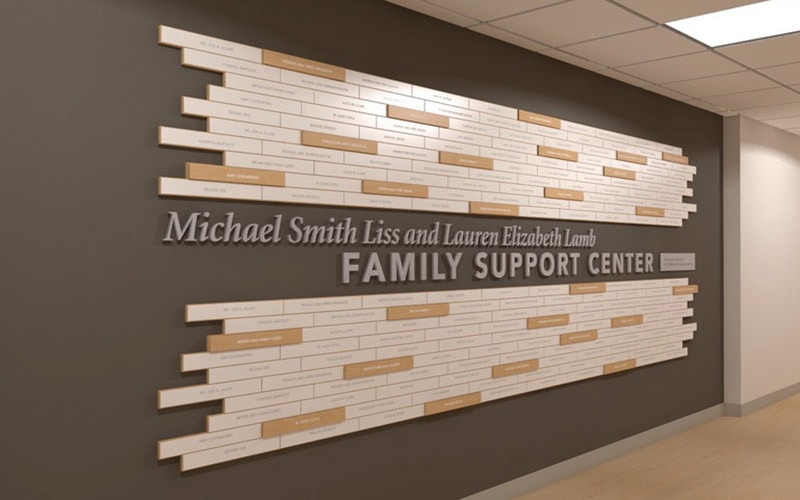
Physical elements such as layered panels, dimensional features, or changeable components make it easier to highlight stories, recognize new donors, or mark milestones.
Employed thoughtfully, these features keep recognition current and engaging without overwhelming the space.
FAQs
Start by defining the purpose and long-term goals. Think about where it will be located, how contributors will be acknowledged, and how the design can evolve over time.
Incorporating messaging, visuals, or small storytelling elements can help connect contributions to real outcomes. This makes the experience more engaging and memorable.
Not always. While tiers are common, some organizations group supporters by campaign or shared impact. The approach should reflect your mission and audience.
They are not required, but they can add value. Digital elements can make it easier to update content and share stories, especially in high-traffic environments.
Designing for flexibility is key. Systems that allow for updates or additions without a full redesign make it easier to keep everything current.
A well-planned donor display is more than a visual feature. It reflects appreciation, builds trust, and reinforces shared purpose.
When people see that generosity is acknowledged in a meaningful way, it strengthens existing relationships and encourages future support. That’s what turns recognition into something lasting.
If you are exploring tips for designing a donor recognition wall, the right partner makes all the difference. At Adler Display, we design iconic recognition features that honor generosity and stand the test of time. Contact us todayto get started.
About Adler Display: For over 85 years, Adler Display has been one of the best-kept secrets behind so many businesses looking their best. Designing and producing a wide variety of high-quality recognition displays, trade show displays, signage and exhibits, lobby and corporate interiors, and historical timelines, Adler’s expert team includes consultants, designers, project managers, and fabricators. Working from a 17,000-square-foot facility in Baltimore that includes a precision woodworking shop, Adler Display handles printing, construction, and finishing on site. Learn how to achieve your imaging goals and make your business look amazing at: www.AdlerDisplay.com.